

Niching can also help you set your rates by providing a clear rationale for the value you bring to the table. The Zippia Research Team has spent countless hours reviewing resumes, job postings, and government data to determine https://www.wave-accounting.net/ what goes into getting a job in each phase of life. An accounting consultant ensures that businesses adhere to financial regulations, conducting regular audits and helping prepare for external audit evaluations.
Accounting consultants vs traditional accountants: what’s the difference?

Employers need to look for candidates with strong analytical skills, deep knowledge of accounting principles and regulations, and excellent problem-solving abilities. They work closely with other financial professionals, such as auditors and financial analysts, to create comprehensive financial strategies that align with their clients’ business goals. Payroll processing involves preparing and reviewing weekly information, managing compilations, reviews, and quarterly and year-end payroll reports. Accounting consultants use payroll processing to assist clients with bookkeeping tasks, implement payroll procedures and policies, and train new employees.
Found 70 Accountant, Full time jobs

An accountant consultant is a professional who provides strategic guidance and financial expertise to businesses, leveraging their knowledge of accounting principles. If you want to become an accounting consultant, you will need to have strong analytical and mathematical skills. You must be able to understand and interpret financial data, and you will need to be able to communicate your findings clearly to clients.
“Luck favors the prepared”
Moreover, as a senior accountant analyst, you are supposed to give general operational assistance to the company’s management. SOX stands for the Sarbanes-Oxley Act, which is a federal law that requires publicly traded companies to establish and maintain internal controls over financial reporting. Accounting consultants use SOX to evaluate and document internal controls, ensure financial processes are compliant with regulations, and collaborate with the accounting department in monthly closing processes. They also work with governance and internal audit teams to ensure SOX compliance during monthly and quarterly reviews, as well as the annual audit. A manager of finance accounting’s role is to oversee the financial activities in a company or organization.
- These degrees often delve deeper into specialized areas of business and accounting, equipping graduates with refined skills and knowledge.
- They also support general expense accounting in prepaid authorization, amortization, accruals, and allocations.
- They can provide advice on tax issues, accounting procedures, budgeting, and financial planning.
- Practical experience advising businesses on financial decisions, operational efficiency, and strategic planning can significantly enhance an accountant’s consultancy potential.
- Even with the job’s demands, it’s crucial to maintain a healthy work-life balance to prevent burnout and ensure sustained productivity.
Becoming an accountant consultant requires a combination of formal education, professional certifications, and practical experience. While formal education and certifications provide the theoretical foundation and professional legitimacy, practical skills, and experience make an accountant consultant genuinely effective. For most, this begins with earning a bachelor’s degree in accounting or a related field, such as finance or business administration. Their role is more than just number crunching; they provide meaningful and actionable insights from financial data that drive essential business decisions.
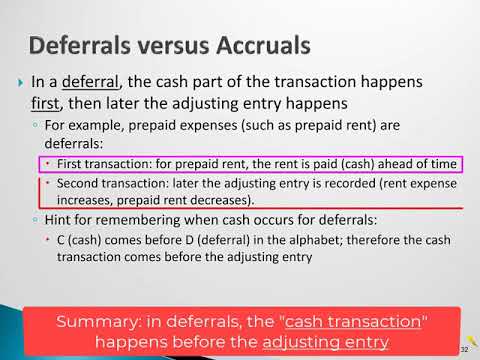
Accounting consultants serve a vital role in businesses of varying sizes and industries. Accounting Consultants are individuals who have a mix of technical accounting knowledge, critical problem-solving skills, and interpersonal abilities. This involves the examination of financial documents, such as balance sheets, income statements, and tax forms, to identify areas where improvements can be made or problems that need to be addressed. Accruals are expenses or revenues that are earned or incurred, but not yet paid or received. Accounting consultants use accruals to perform general accounting functions, including general ledger maintenance, monthly accruals, and payroll accounting.
Some accounting consultants become corporate accounting managers, office managers, or plant controllers. They can also become finance planning managers, director of accounting & finance, or divisional controllers. Whether you have specialized skills or are proficient in several areas, there is a niche where you can provide great value based on your experience, skills and interests. If the accounting consulting topics in highest demand aren’t your best skills, you may want to start other advisory services in your firm. Department of Labor’s Bureau of Labor Statistics, the unemployment rate for accountants and auditors was 1.4% in the fourth quarter of 2019.
Given the nature of their work, accountant consultants need to be precise and thorough. Specific periods, like the end of the fiscal year or tax season, can require extended working hours to meet clients’ needs. They often carry professional certifications such as Certified Public Accountant (CPA) or Certified Management Accountant (CMA), which are a testament to their competence in the field.
The EY DNA of the CFO Survey identifies key priorities for CFOs to drive bolder change in their finance teams and deliver better performance. However, the cons include intense work pressure, long working hours, and the need for constant skill upgrading. Being adaptable and flexible is necessary with ever-changing client needs, industry trends, and regulatory environments. accounting technology Each of these areas requires unique methodologies and tools, the adept handling of which is a testament to a consultant’s capabilities. These designations boost one’s credentials and open doors to greater job opportunities and career advancement. In a fiercely competitive landscape, an additional degree can add significant weight to one’s credentials.
They might be independent professionals, members of an accounting firm, or key players in the finance departments of large corporations. CPAs, you know you’re required to earn a set number of Continued Professional Education (CPE) credits each year to maintain your license. Completing one of Becker’s Consulting Services Libraries would satisfy these requirements and bring you closer to where you want to be in your consulting work. You might be interested in a particular field within your consulting practice but haven’t had a chance to explore a niche. You also might say, “I know exactly which industry and area I want to focus on,” but aren’t sure how to make that transition. In either case, know that you have options on how to gain skillsets and industry knowledge on the job.
An accounting consultant is a professional who provides businesses with advice on their accounting systems. They review accounting practices, lead the integration of new systems, and assist with financial reporting. They also help clients comply with legal policies and provide services like financial analysis and system conversion. They also manage general ledgers, reconcile financial statements, and collaborate with auditors. They handle tasks like reconcile bank accounts, prepare payroll accounting, and monitor treasury operations. They also prepare management reports, identify system conversion errors, and support data migration and conversion projects.
This dynamic environment necessitates that https://www.accountingcoaching.online/closing-entries-3/ possess the ability to adapt swiftly and provide services that meet their client’s evolving needs. They design these systems to streamline financial operations, improve reporting accuracy, and ensure strict compliance with financial laws and regulations. Generally speaking, your clients will expect a fixed fee for consulting services. Not only that, but if you stick to hourly billing, you will need to take on and maintain more clients to increase your profits. With a fixed consulting fee, you charge for your value, above and beyond your time. Your clients pay you for your expertise, knowledge and guidance, and you will likely reap the rewards of that relationship in terms of more business from them and their referrals as well.
An ongoing survey by Indeed shows that the average salary for accounting consultants in the United States is $78,960 per year (as of April 2020). Of course, the COVID-19 pandemic may affect the profession to a degree, but over the past decade, accountants and auditors have maintained higher employment rates than many other professional positions. While there are similarities, the primary difference between advisory services and accounting consulting is the length and purpose of the engagement. No matter the timing of your transition to accounting consulting, you will need to plan your new business in advance. There may be additional training or education to help you specialize in a particular type of consulting, but there are also other considerations that require some forethought.
They also supervise teams that complete these tasks and ensure the accuracy of the financial data. For example, they may prepare balance sheet reconciliations for payroll-related accounts and review multiple bank accounts and corporate balance sheet reconciliations. Real estate refers to property that generates income, such as office buildings, houses, and land.
As clients seek more answers and more guidance, the demand for accounting consultants increases as well. Becoming an accounting consultant takes a special set of skills beyond your technical accounting expertise. Technical skills aren’t necessarily the divide between a great consultant and a mediocre one.